CityU neuroscientists unveil the novel therapeutic potential of Metaxalone for treating nerve injuries
Traumatic injuries to the peripheral nervous system are a leading cause of disability, especially patients with proximal peripheral nerve injury. It’s hard to regenerate and regain normal function in a short period, and it often leads to sensory and motor dysfunction, which greatly affects the patient’s quality of life. Recently, a research team led by City University of Hong Kong (CityU) neuroscientists found that metaxalone treatment accelerates nerve repair and function recovery comparable to immediate treatment, offering a highly relevant clinical strategy.

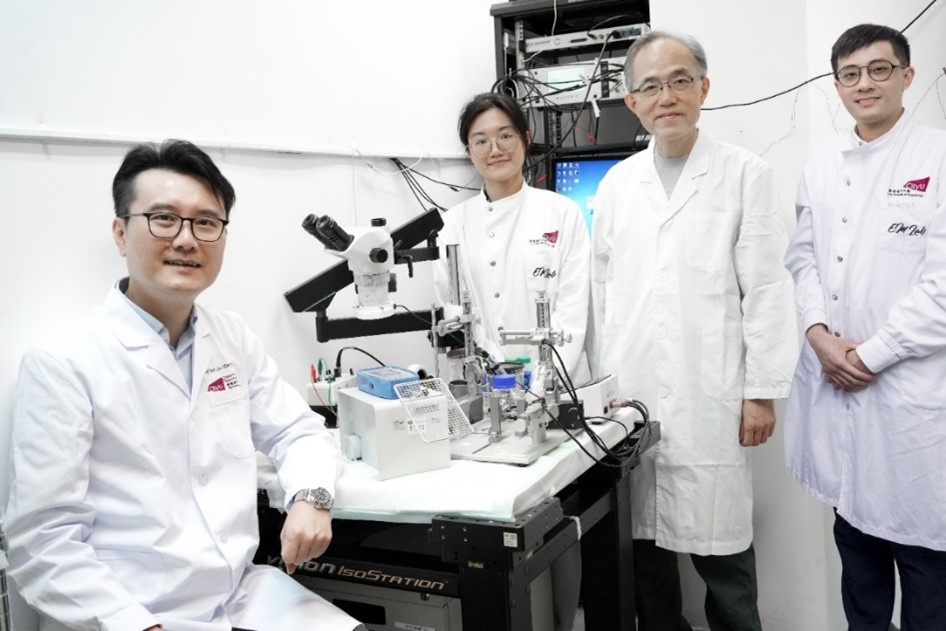
The major challenge facing scientists and clinicians today is how to rekindle the intrinsic growth capacity of injured neurons to achieve full function recovery after nerve injury. A research team led by Professor Eddie Ma Chi-him in the Department of Neuroscience at CityU found that Fmn2-deletion enhances microtubule dynamics, axon regeneration and function recovery. Using the gene signature of Fmn2-deletion identified a Food and Drug Administration (FDA)-approved drug, metaxalone, which recapitulates the growth-promoting effects of Fmn2-deletion for peripheral nerve injury.

Metaxalone treatment delayed 24 hours post-injury still can accelerate substantial nerve repair and function recovery to a level comparable to that of metaxalone treatment immediately after injury, which simulate a clinically relevant situation where hours could elapse before any treatment is available on site after an accident. Repurposing an existing FDA-approved drug such as metaxalone would also save time, since normally, the Phase I clinical trial can be skipped, greatly accelerating the drug-development process.

“We demonstrated that low-dose ionizing radiation (LDIR) promotes axon regeneration and function recovery after peripheral nerve injury,” said Professor Ma. LDIR induces DNA methylation in Fmn2 and methylation can act like a switch to turn genes on or off. In the case of Fmn2, the methylation caused by LDIR makes it less active and leads to decrease in gene expression. The speed of nerve repair is significantly increased when we intentionally reduce the amount of Fmn2 in the nerve. This discovery establishes Fmn2 as a key player in how our nerve fibers respond to injuries and regenerate, and how the internal structures of our cells called microtubules work, making it a crucial factor in our body's ability to heal and restore function after a nerve injury. Bioinformatics screening of FDA-approved drugs identified metaxalone, administrated either immediately or up to 24 hours post-injury, accelerated function recovery. “Our work uncovered a novel axon regeneration function of Fmn2 and a small-molecule strategy for peripheral nerve injury,” explained Professor Ma.

The research team was the first to identify Fmn2 as a novel regeneration-associated gene, which plays an important role in the growth of nerve cells. This is an important proof-of-concept study to demonstrate that FDA-approved small molecules identified by bioinformatics analysis can be readily used as a potential therapy for not only peripheral nerve injury, but also transitional drug discovery in a range of nervous system disorders.
No treatment is available for patients with proximal peripheral nerve injury, such as that caused by a car accident or common contact sports. It requires long-distance axon regeneration to re-innervate their target muscles. Function recovery is virtually non-existent even after surgical repair. Hence, one of the major challenges is to identify a gene(s) that can enhance the intrinsic growth capacity of injured neurons. The study findings validate Fmn2 as a key regular for modulating the intrinsic growth program and offer hope to patients with proximal peripheral nerve injury by identifying an FDA-approved drug, metaxalone, for treatment.
The findings were published in the journal Neuron under the title “Genome-wide study reveals novel roles for formin-2 in axon regeneration as a microtubule dynamics regulator and therapeutic target for nerve repair”.
For enquiry, please contact Professor Eddie Ma Chi-him from the Department of Neuroscience in CityU by email at eddiema@cityu.edu.hk.