Novel electrocatalysts for hydrogen production offer hope for solving the energy crisis
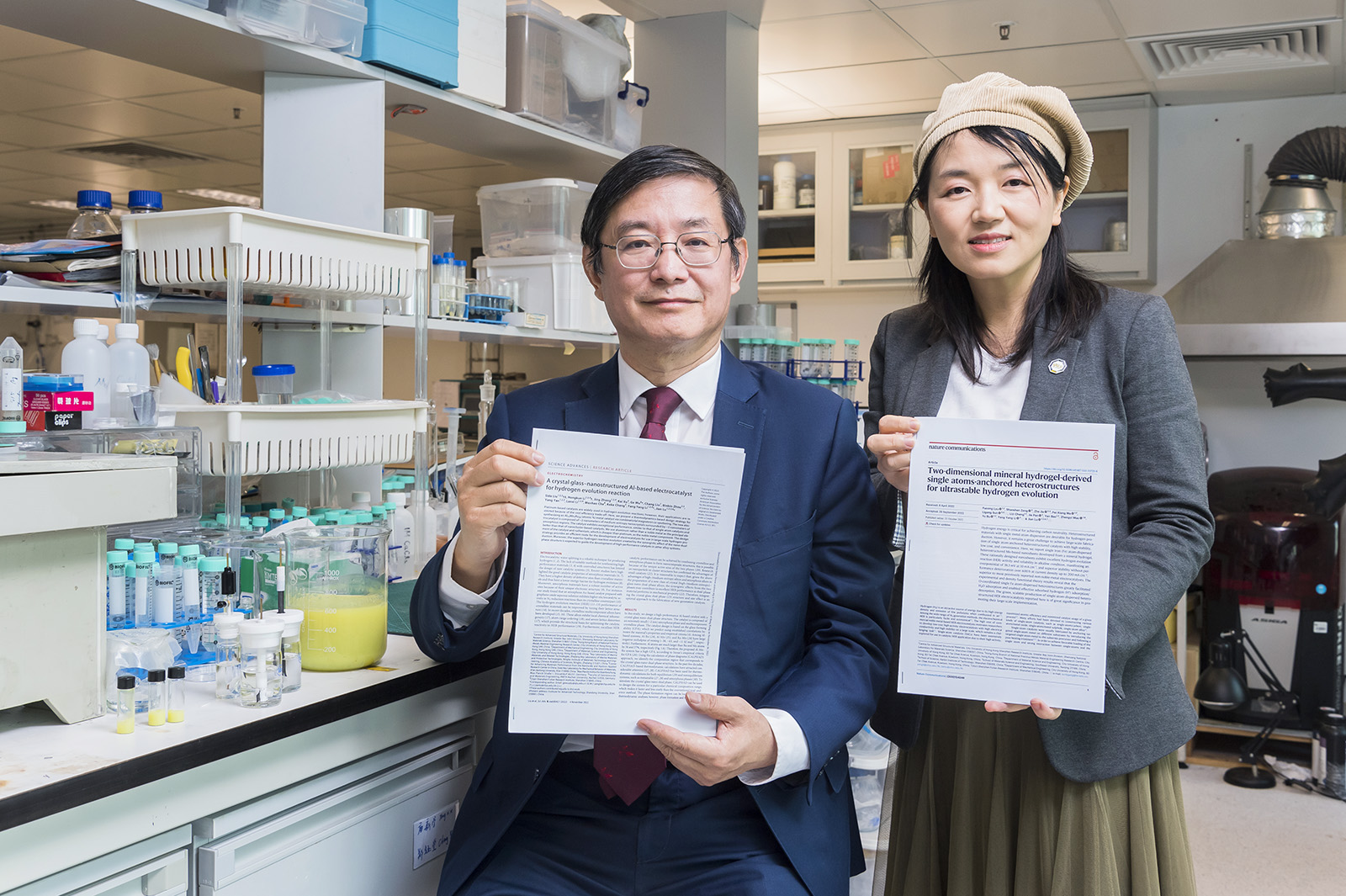
Two efficient and inexpensive novel electrocatalysts for hydrogen production offering sustainable green solutions for the energy crisis have been developed by City University of Hong Kong (CityU).
Hydrogen is a clean and sustainable alternative to fossil fuels while the production of low-cost, high-performance hydrogen evolution catalysts is a core problem in the energy field.

A research team co-led by CityU materials scientists has recently developed an innovative, ultra-stable and highly efficient hydrogen evolution reaction (HER) electrocatalyst.
Electrochemical HER is a widely used hydrogen-generation method. Commercial HER electrocatalysts are made from expensive precious metals. A promising type of HER electrocatalyst intensively studied by scientists is single-atom catalysts for their potential in catalytic HER applications because of their high activity, maximised atomic efficiency, and minimised catalyst usage. However, the fabrication of single-atom catalysts is generally complicated, and requires a lot of energy and time.
The new electrocatalyst is based on two-dimensional mineral gel nanosheets and does not contain any precious metals. It can be produced on a large scale and help achieve a lower hydrogen price in the future.
“Compared with other common single-atom substrate precursors, such as porous frameworks and carbon, we found that mineral hydrogels have great advantages for the mass production of electrocatalysts owing to the easy availability of the raw materials, a simple, environmentally friendly synthetic procedure, and mild reaction conditions,” said Professor Lu Jian, Chair Professor in the Department of Mechanical Engineering (MNE) and the Department of Materials Science and Engineering (MSE) at CityU, who led the research.
The experiments found that the new catalyst exhibits excellent electrocatalytic activity, long-term durability and ultra-stability.
The findings were published in Nature Communications under the title “Two-dimensional mineral hydrogel-derived single atoms-anchored heterostructures for ultrastable hydrogen evolution”.
The first author of the paper is Dr Lyu Fucong in MNE. The corresponding authors are Professor Lu, Dr Li Yangyang, Associate Professor in MSE, and Dr Sun Ligang, from the Harbin Institute of Technology.
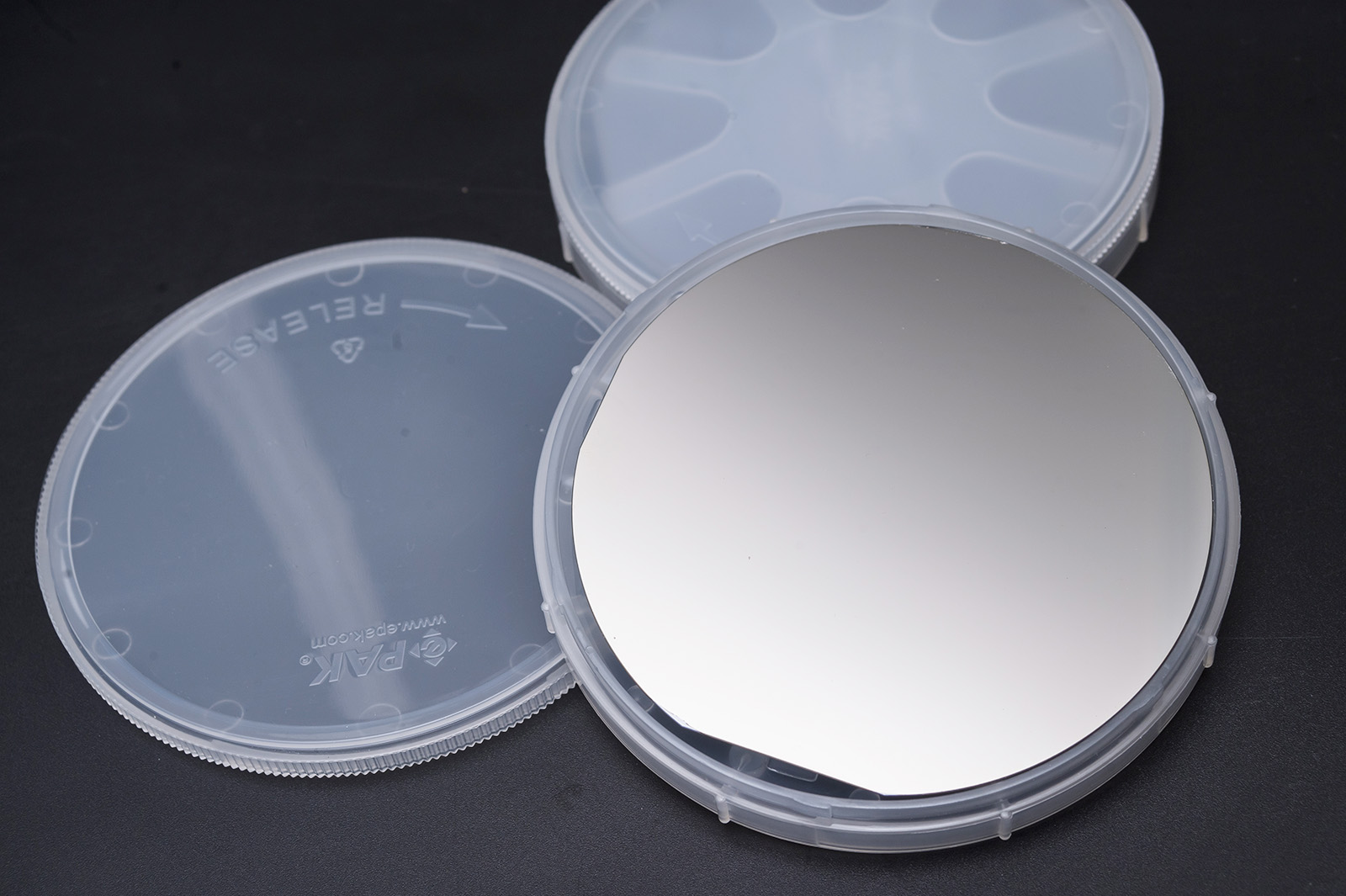
Another breakthrough by Professor Lu’s team is a new type of hydrogen evolution catalyst.
“Using a simple method called magnetron co-sputtering, my research team has successfully produced a high-performance, low-cost substitute for platinum-based electrocatalysts, providing an effective solution to this problem,” said Professor Lu.
The new electrocatalyst, based on AlMnRu (aluminium, manganese and ruthenium) films, has a crystalline-amorphous (non-crystalline) dual-phase nanostructure. Dual-phase materials are needed because each phase has separate benefits: the local chemical inhomogeneity, short-range order and severe lattice distortion in the nanocrystalline phase are desirable, while the amorphous phase offers abundant active sites with a lower energy barrier for hydrogen evolution reaction.
“This aluminium-based alloy electrocatalyst has unique bonding states, a small lattice size, and crystalline/amorphous coexistence, providing a structural basis for achieving high catalytic efficiency,” Prof Lu explained. “We use aluminium rather than a noble metal as the principal element of the catalyst, and ruthenium, which is cheaper than platinum, as the noble metal component.”
The innovation was published in the top academic journal Science Advances, titled "A crystal-glass nanostructured Al-based electrocatalyst for hydrogen evolution reaction".
Dr Liu Sida, a former postdoctoral fellow at CityU (currently a professor at Shandong University), and Li Hongkun, an MSE PhD student, are the co-first authors. The corresponding authors are Professor Lu and Dr Li from CityU, and Professor Wu Ge from Xi'an Jiaotong University. Professor Wu obtained his PhD from CityU. Other researchers from CityU include Dr Zhou Binbin, a former postdoc in MNE and currently a Research Associate Professor at the Shenzhen National Institute of Advanced Electronic Materials Innovation), Zhong Jing and Li Lanxi, both MSE PhD students, and Yan Yang, an MNE PhD student.