Smart Mask improves personal and public health by detecting breathing, coughing and speaking

Researchers at City University of Hong Kong (CityU) have developed an Internet of Things (IoT) Smart Mask integrating an ultrathin nanocomposite sponge structure-based soundwave sensor, which can detect and classify various respiratory sounds (breathing, coughing and speaking) using deep learning, thus helping to improve personal and public health.
The research is led by Professor Li Wenjung, Chair Professor in the Department of Mechanical Engineering (MNE), Professor Wang Jianping, Professor in the Department of Computer Science (CS), and Dr Yu Xinge, Associate Professor in the Department of Biomedical Engineering (BME).

Across the globe, the current sentiment is that the COVID-19 virus is becoming endemic, similar to common cold and flu viruses. However, infectious disease experts have warned that we must not be too optimistic and be realistic about the likely levels of death, disability and illness that may be caused by a “COVID-19” endemic phase. It is important to remember that endemicity does not correspond to harmlessness. Malaria, for example, was widely recognised in ancient Greece by the 4th century BC, but it is still considered an endemic disease in almost 90 countries today. Therefore, wearing masks as a common protective measure against the transmission of the coronavirus, or as a fashion accessory with the conventional function of preventing the spread of respiratory infections, such as influenza viruses, could still be very important in densely populated cities for the foreseeable future.
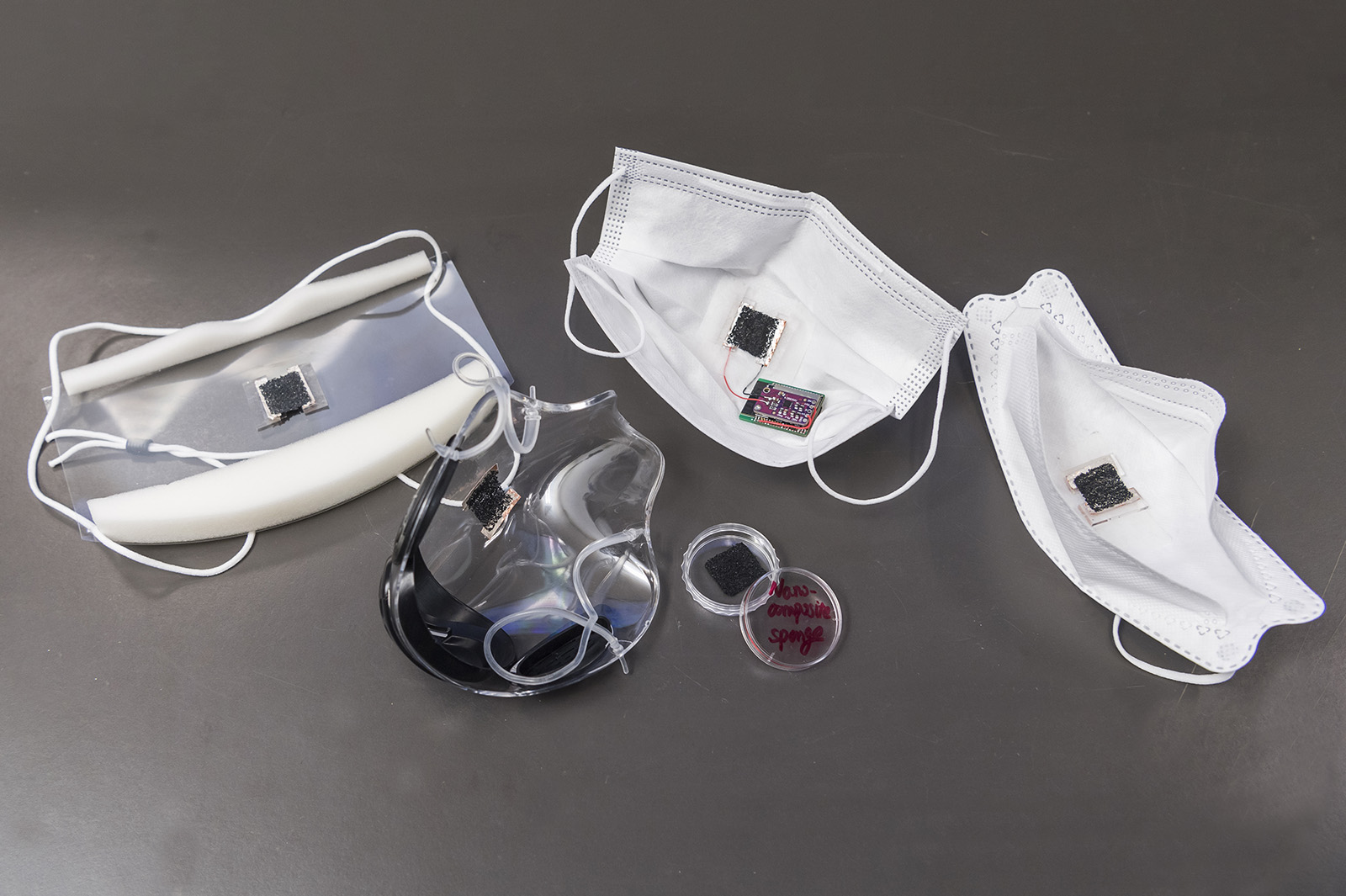
The Smart Mask developed by the CityU team integrates an ultrathin flexible wide-bandwidth soundwave sensor made of carbon nanotube/polydimethylsiloxane (CNT/PDMS) nanocomposites, which is as thin as 400 μm and enables high sensitivity in both static and dynamic pressure measurement ranges – up to 4000 Hz – for tracking, classifying and recognising three different types of respiratory activities – breathing, speaking and coughing – and identifying speech.
Thirty-one human subjects were recruited for the study, from whom respiratory activity was collected while they wore the smart mask. The data were processed and classified using deep-learning methods: namely, a support vector machine and convolutional neural networks. All human subjects had macro recalls above 90% (with a maximum as high as 100%), and the average reached 95.23% for all three types of respiratory sounds, showing stable and robust performance.
“Irregular respiratory activities are key symptoms of respiratory illness and are usually of great importance for diagnosing diseases such as pertussis and asthma,” said Professor Li. “It has already been shown that COVID-19 may lead to notable changes in the voice of infected people. Therefore, our novel IoT Smart Mask enables prolonged and systematic monitoring, screening and diagnosis of several common cough-related diseases.”
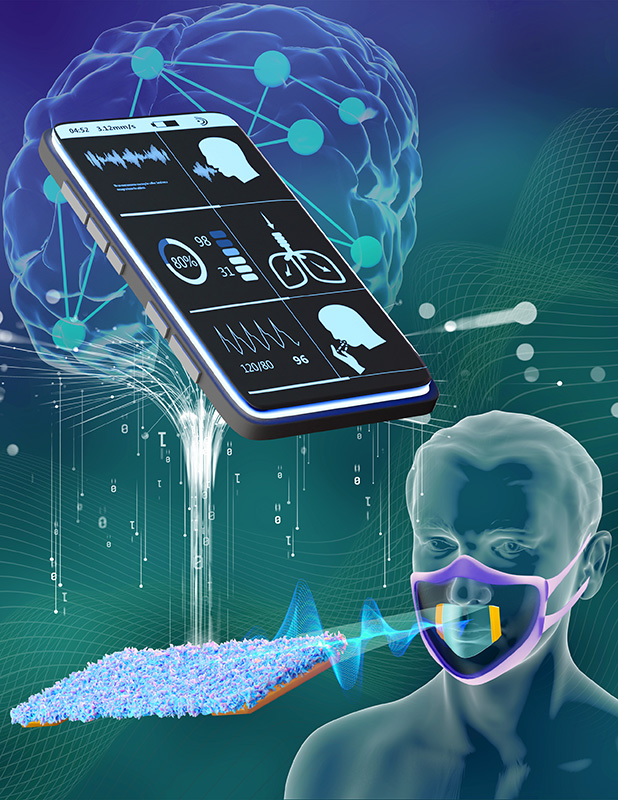
“Presently, researchers use commercial sensors to detect temperature changes and airflow to count the number of coughs, but they cannot capture important physiological information contained in the human voice. Our smart mask is sensitive to both subtle air pressure and high-frequency vibrations and can detect three phrases of coughing,” explained Professor Wang.
“As a potentially low-cost, daily smart wearable device, this new IoT Smart Mask will help personal and public health management of respiratory disease screening, especially for cities with dense populations, such as Hong Kong,” said Dr Yu.
The research is led by the CityU team but with important contributions from Professor Shen Jiangang’s team from the School of Chinese Medicine of The University of Hong Kong.
The paper was published in the high-impact factor journal Advanced Science.