Producing efficient LEDs based on 2D perovskite material breakthrough
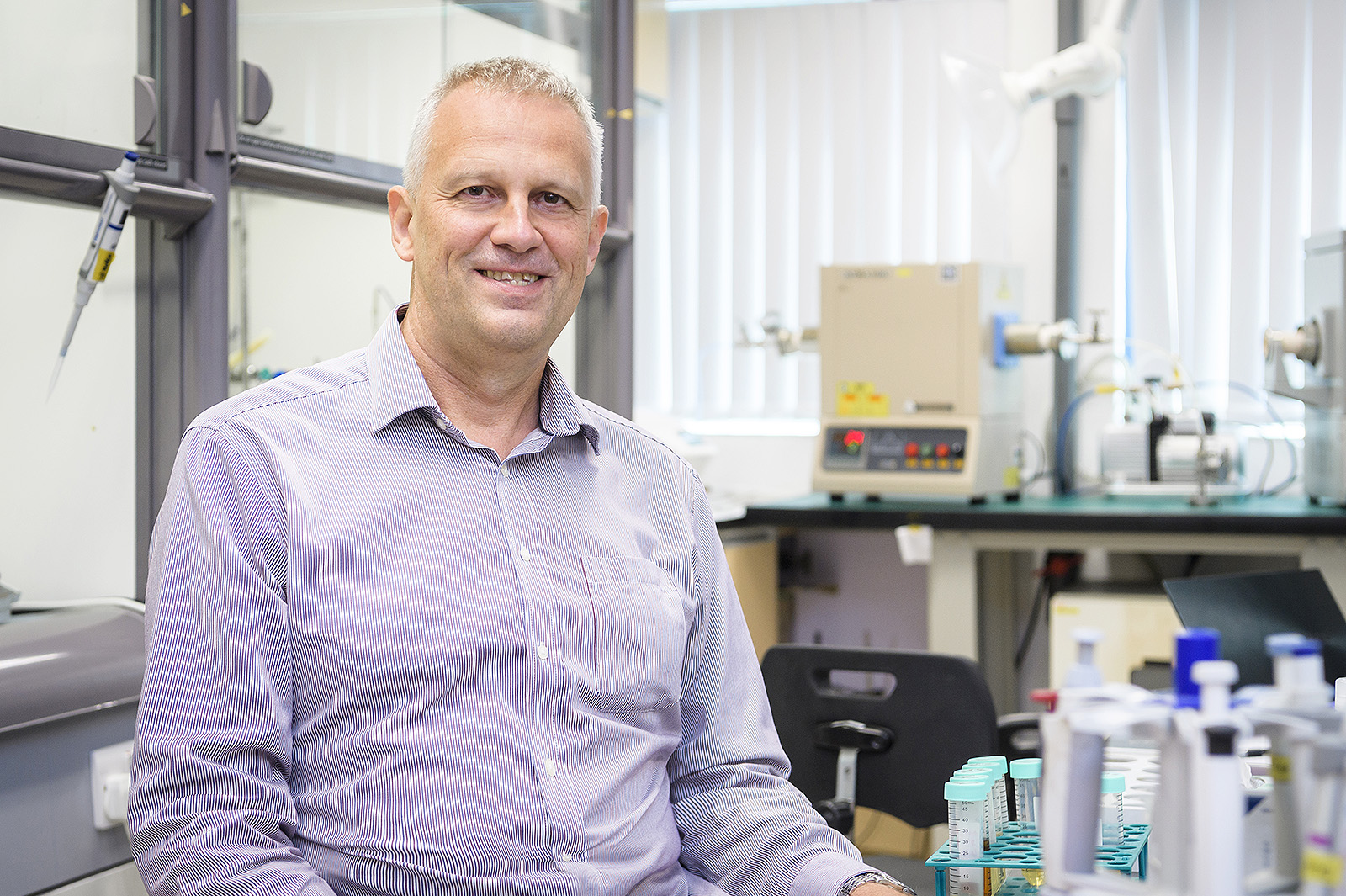
The use of a simple organic molecule during the fabrication of a two-dimensional (2D) perovskite results in one of the highest recorded efficiencies for perovskite-based devices. Light-emitting diodes (LEDs) employing this 2D perovskite material achieved an external quantum efficiency as high as 20.5%, which rivals the best organic LEDs, according to a research co-led by City University of Hong Kong (CityU).
Led by Professor Andrey Rogach, Chair Professor at the Department of Materials Science and Engineering, CityU, and his collaborator Professor Yang Xuyong from Shanghai University, the research team has worked on 2D perovskite materials and succeeded to realise such efficient and bright green LEDs.

Their technology yielded the best reported performance on both current efficiency and external quantum efficiency. This work has now put the perovskite LEDs close on the heels of current commercial display technologies, such as organic LEDs.
The findings were published in the scientific journal Nature Communications, titled “Smoothing the energy transfer pathway in quasi-2D perovskite films using methane sulfonate leads to highly efficient light-emitting devices”.
The key to the powerful change lies in the addition of around 10% of a simple organic molecule, called methanesulfonate (MeS). This molecule reconstructs the structure of the 2D perovskite nanosheets, while simultaneously enhancing exciton energy transfer between sheets of different thicknesses. It is also useful in reducing defects in the 2D perovskite structure, contributing to higher efficiency.

The consequences for producing better LEDs are encouraging. Brightness of 13,400 candela/m2 at a low applied voltage of 5.5 V, and an external quantum efficiency 20.5% is recorded. This is close to the maximum that can be achieved by many existing LED technologies, and has almost doubled the external quantum efficiency level of 10.5% reported in the previous collaborative study of the same groups two years ago.
“The CityU team has built-up its expertise on perovskite materials to a very high level in a relatively short period of time, thanks to funding support from Senior Research Fellowship by the Croucher Foundation,” said Professor Rogach.
“The high brightness, excellent colour purity, and commercial grade operating efficiency achieved marks 2D perovskites as an extremely attractive materials for future commercial LEDs, and potentially also display technology. It’s a tangible outcome from both fundamental and applied research into novel nano-scale materials” he adds.
Other collaborators include researchers from CityU, Shanghai University, Jilin University, University of Science and Technology of China, Nankai University, Wuhan University and Chinese Academy of Sciences.