First dual stem cell therapy brings new hope for cardiac repair
Donna Wong

A research team featuring an expert from City University of Hong Kong (CityU) has developed a novel dual approach for the first time for concurrently rejuvenating both the cardiac muscle and vasculature of the heart by utilising two types of stem cells. The results give hope for a new treatment for repairing myocardial infarction (MI) heart.

Dr Ban Ki-won, Assistant Professor of the Department of Biomedical Sciences and his research team, including researchers from Konkuk University, The Catholic University of Korea, Pohang University of Science and Technology and T&R Biofab in South Korea, have conducted the first study of two distinct stem cell effects for cardiac repair. The two major types of stem cells employed are human bone marrow derived mesenchymal stem cells (hMSCs) and cardiomyocytes derived from human induced pluripotent stem cells (hiPSC-CMs). The research findings have been published in Nature Communications in a paper titled “Dual stem cell therapy synergistically improves cardiac function and vascular regeneration following myocardial infarction”.
“Both cardiac muscles and vasculatures are severely damaged following MI, and so the therapeutic strategies should focus on comprehensive repair of both at the same time. But the current strategies only focus on either one,” Dr Ban said.
Dr Ban said that, with limited therapeutic options for severe MI and advanced heart failure, a heart transplant was the last resort. However, such an operation is very risky, costly and subject to limited supply of suitable donors. Therefore, stem cell-based therapy has emerged as a promising therapeutic option.
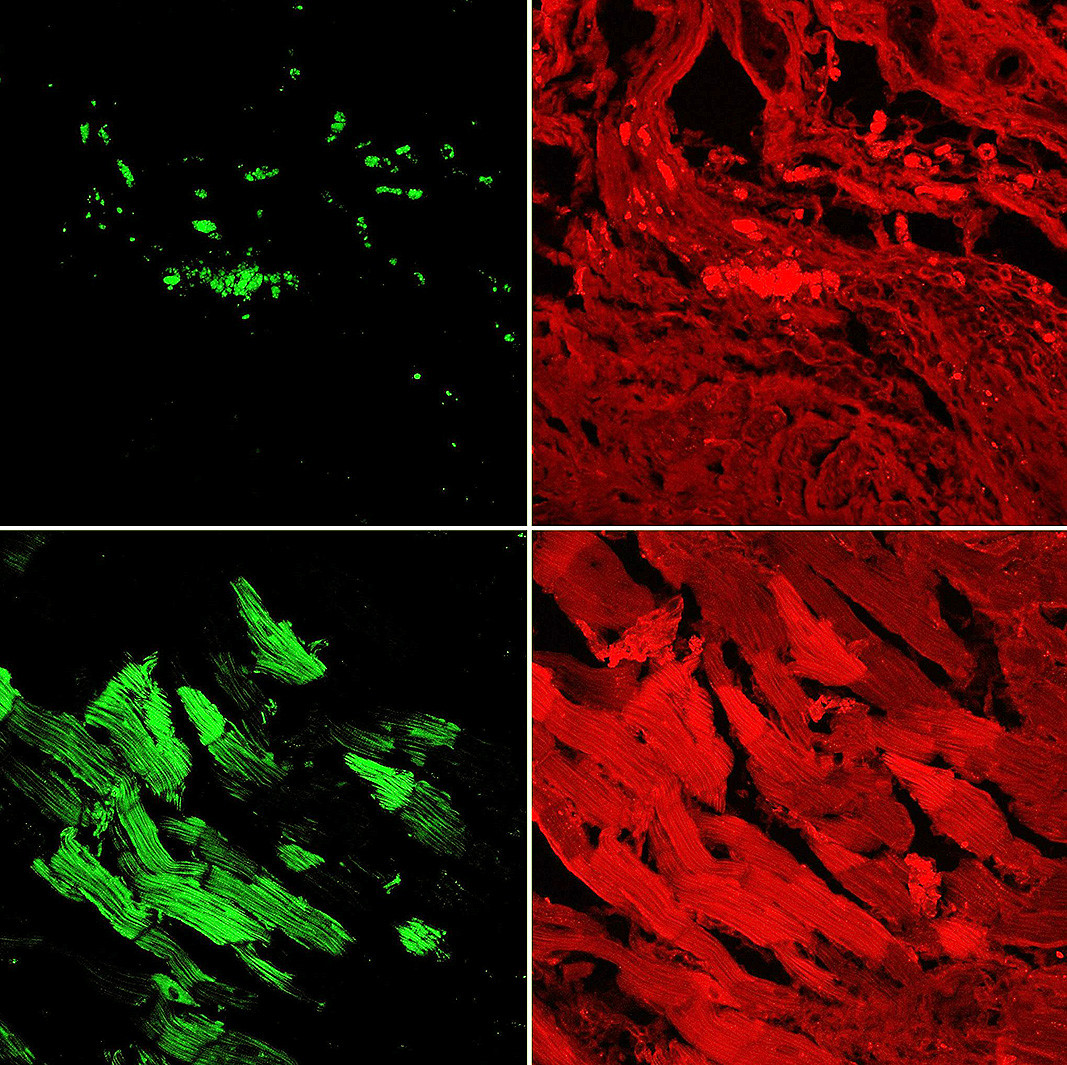
In the study, the hiPSC-CMs were injected directly into the border zone of the rat's heart, while the hMSCs-loaded patch was implanted on top of the infarct area, like a bandage. The results showed that this dual approach led to a significant improvement of cardiac function and an enhancement of vessel formation on a MI heart.
“We believe this novel dual approach can potentially provide translational and clinical benefit to the field of cardiac regeneration. Based on the same principle, the protocol may also be utilised for repairing other organs including the brain, liver and pancreas in which multiple types of stem cells co-exist,” Dr Ban added.
The research team is working on follow-up studies in larger animal models such as pigs. The patent application for this research result has been submitted.
The first co-authors of the paper are Dr Park Soon-jung from Konkuk University School of Medicine, Dr Kim Ri-youn and PhD student Lee Sung-hun from CityU and PhD student Park Bong-woo from The Catholic University of Korea.