


“Hidden Youth” should be Lauded for Their Contributions to Society
Hikikomori cases range from adults going years or decades without leaving their homes and rarely leaving their rooms, to introverted youth who learn to live fruitful, productive lives online
Dr Gloria Chan and her colleagues view Hikikomori as a phenomenon rather than an illness.
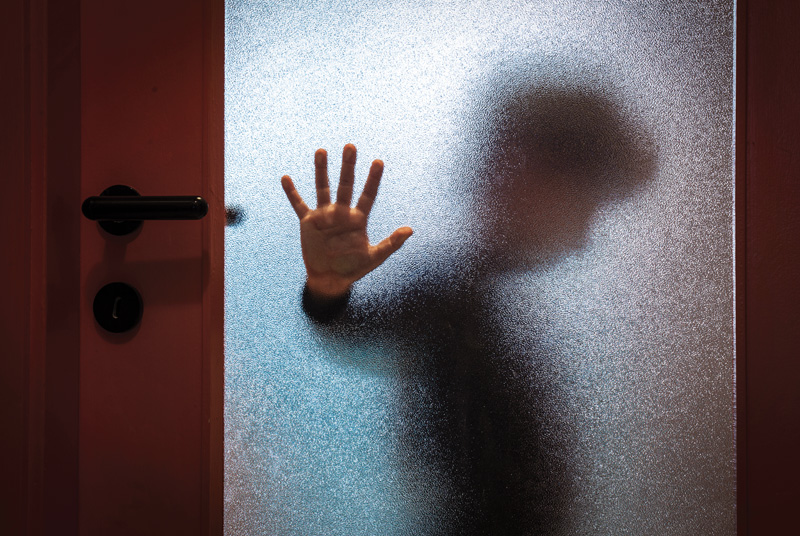
Many young people opt to be hikikomori and engage in a hidden lifestyle out of their own choice, but the general public often labels them as having low skill levels and timewasters.

Though many of the young people who are retreating from society prefer an Internet-based lifestyle, being hidden is not the same as being addicted to the Internet.
COVID-19 has forced many people to live in social isolation for the first time. For some young people, however, it has been a way of life for some time.
Hikikomori, a term which originated in Japan, refers to a condition where the youth withdraw into their homes and does not participate in society for an extended period of time, usually six months or longer. Research indicates that hikikomori—also known as “socially withdrawn youth” or “hidden youth”—is not only a phenomenon in Japan now, but has become more prevalent in Hong Kong.
“Hikikomori is especially prominent in Asia because of dominant, mainstream discourses in society,” explains Dr Gloria CHAN, Senior Research Fellow at the Department of Social and Behavioural Sciences of CityU’s College of Liberal Arts and Social Sciences, who has conducted extensive research on the topic with Professor Wing T LO, Head of the Department. “In Hong Kong, the dominant expectation of the youth is that they should enter the university and pursue a prestigious career. Thus, any behaviour deviating from this perceived norm is viewed as undesirable.”
She says society, family, media and school life are among the factors that can lead to young people retreating from society in favour of an almost exclusively Internet-based lifestyle.
“A mismatch between individual expectations and societal expectations causes the youth to withdraw from society rather than engage with it,” Chan says. “Meanwhile, the media plays a part in enunciating and portraying the negative side of hikikomori by, for example, reporting on the violent cases.”
“Family is another reason hikikomori is more common in Asia than in the West. In Asian society, there is less focus on individualism and it is more common for the youth to stay at home. Therefore, it is more likely to be a co-dependency between parents and youth, and the family is viewed as a ‘safe haven’.”
When youth find themselves without a real social position, or way to stand in society, they will choose being hidden as the ultimate coping strategy
Dr Gloria Chan
Research conducted by Chan and her colleagues in Hong Kong and Japan found the phenomenon had a higher occurrence among upper-middle class families. This is most likely because there was more pressure to live up to the families’ expectations, as well the families’ ability to support their children’s living expenses.
Ultimately, however, Chan believes it is the negative labelling imposed by conventional society that plays the biggest role. “We do not view being hidden as an individual problem; instead, we believe societal problems to be the most important factor among all of the aforementioned factors,” she says. “We find that negatively labelling youth’s deviant behaviour is a very significant cause of hikikomori. Being hidden is not caused by separate, clear-cut factors; rather, being hidden involves a complicated, stage-like development process, involving interplay of the aforementioned factors, which has an impact on individuals’ sense of well-being and identity.”
“When youth find themselves without a real social position, or way to stand in society, they will choose being hidden as the ultimate coping strategy.”
It can be difficult to appropriately label hikikomori cases as it is a relatively new phenomenon. They can range from adults going years or decades without leaving their homes and rarely leaving their rooms, to introverted youth who learn to live fruitful, productive lives online.
Chan emphasises that hikikomori is very much a chosen lifestyle, and is not deserving of its negative stigma. She believes that the negative label society has placed on the phenomenon exacerbates the issue. She also thinks that, contrary to popular belief, socially withdrawn individuals are not a hindrance to society. “Hidden youth do not cause problems to society—rather, they show concern about social issues and make contributions to society in their own ways,” Chan says. “Also, thanks to the advancement of technology, the Internet not only provides space for entertainment and subculture, but also provides opportunities for teaching, learning and work. The Internet has brought about changes in the mode of work and hikikomori have made use of this opportunity to engage in internet based work and earn a living while staying at home.”
Chan says the COVID-19 outbreak has raised many questions about hikikomori. The general public is experiencing the hikikomori lifestyle for the first time and, while some people may be struggling, others may find that they enjoy spending more time at home. Will this cause more people to empathise with, or possibly adopt the hikikomori lifestyle?
However, many socially withdrawn youth’s lives have not been disturbed during the outbreak, because their work was already strictly online. This begs the question: Does hikikomori have its benefits over a traditional lifestyle?
“As hidden youth can earn a living by performing internet-based work, the epidemic comparatively imposes less impact in their employment or means of living during the COVID-19 outbreak, while some of their parents have been fired during this period,” Chan says. “It is possible the living experience during the COVID-19 outbreak can help people rethink the nature of ‘employment’ and ‘lifestyle’, and whether we should still view staying at home as ‘non-productive’, a problem that needs to be corrected.”
Many young people opt to be hikikomori as it allows them to go about their business without the fear of being judged by society. Often, they display confident, high status identities online. It is not that they are unable to form high-quality social relationships, just that their relationships are formed online rather than in face-toface contexts. “This is about the dominant ideology in society, which highly values meritocracy and equates personal achievement with self-identity,” Chan says. “Why should someone unable to get into university be seen as a failure? It is not for everyone. But society labels people who spend a lot of time gaming or online as failures, timewasters and as such, they become outcasts and withdraw from mainstream society completely.”
Chan and her colleagues describe hikikomori as a “multi-faceted issue” whose origins are difficult to pinpoint. Some cases may be due to family and school issues. In many cases, socially withdrawn youth act this way out of choice and are leading a self-preferred lifestyle rather than forcing themselves to re-engage into a society that does not align with their values.
Two things have been made clear by Chan and her colleagues. More research needs to be done on this growing phenomenon so that clearer distinctions, treatments and interventions can be made. The second is that it is time to do away with the negative stigma society has placed on hikikomori.
“The general public often views [hidden youth] as having a low skill level, but we do not agree. They engage in a hidden lifestyle because their interests, wishes and expectations do not match societal standards and expectations. In fact, we view many hikikomori as pioneers who advocate a new lifestyle in the contemporary technological era.”