
- P6413, Purple Zone, 6/F Yeung Kin Man Academic Building
- +852 3442-5843
- +852 3442-0128
- whyung@cityu.edu.hk
- CityU Scholars
- Lab Website
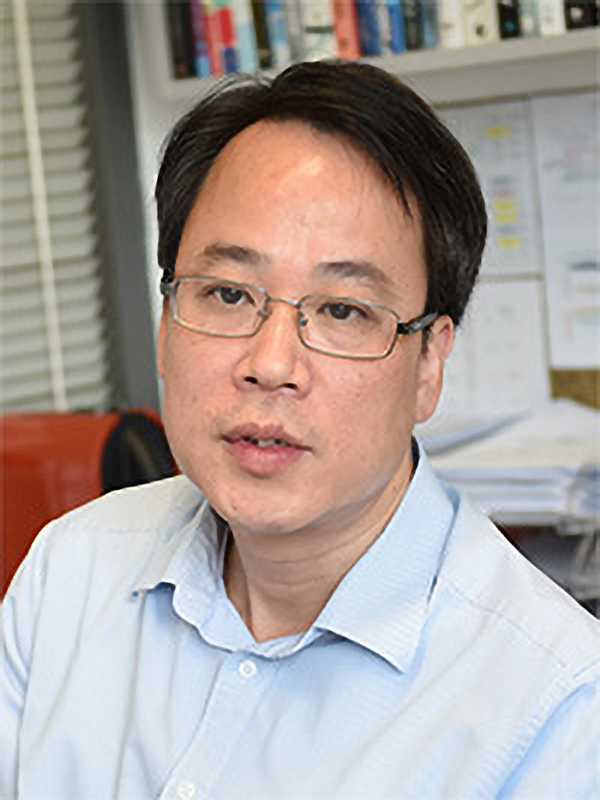
Professor Wing Ho Yung received his BSc and MPhil from The Chinese University of Hong Kong (CUHK). He was a recipient of the Commonwealth Scholarship and the Croucher Foundation Fellowship that supported his DPhil study and post-doctoral training at the University of Oxford, under the supervision of Prof. Julian Jack, FRS. He also obtained a first-class honour in BSc in computing science and information system, University of London.
Prof. Yung has broad research interests in understanding mechanisms underlying various brain functions as well as their aberrations in different brain disorders. He has made significant contributions in elucidating the nature of synaptic transmission in the basal ganglia circuitry and their involvements in both motor and cognitive deficits in neurodegenerative disorders. He also pioneered the antidromic activation hypothesis to explain the therapeutic mechanism of deep brain stimulation for treating Parkinson’s disease. More recently, he focuses on the neural circuits and plasticity mechanisms responsible for the expression of cognitive and behavioral flexibility in animals.
Prior to joining CityU, Prof. Yung had served as the founding director of the Gerald Choa Neuroscience Centre, CUHK. Apart from being a core member of the Hong Kong Society of Neuroscience and Hong Kong Brain Foundation for many years, he has been active in serving international neuroscience bodies, including the Governing Council of the International Brain Research Organization (IBRO), as Secretary General of the Federation of Asian-Oceanian Neuroscience Societies and member of the IBRO Asia-Pacific Regional Committee.
Research Interests
- In higher animals, adaptive behaviours in response to the constantly changing environment rely largely on flexibility in cognition, a complex higher brain function that underpins intelligence and creativity. The laboratory aims to decipher the neural circuits and mechanisms underlying this important cognitive function as well as its malfunction in various neuropsychiatric and neurodegenerative disorders.
- The capability to master novel, complex motor skills is a remarkable ability, which is essential for daily lives and survival. The laboratory is interested in deciphering the cellular and network mechanisms underlying the emergence of neuronal assembly in the brain for the encoding as well as the transfer of motor memory. The aberrations in these processes and pathways in brain disorders like Parkinson’s disease are also explored.
To tackle the above questions, a multitude of cutting-edge neuroscience and computational techniques are employed, including virus-assisted neural circuit mapping, multi-array electrophysiological recording, two-photon imaging, optogenetics, network analysis and machine learning.
Selected Publications
* Corresponding / Co-corresponding author
- Liang T, Peng R.C., Rong K.L., Li J.X., Ke Y & Yung W.H.* (2024) Disparate processing of numerosity and associated continuous magnitudes in rats, Science Advances, 10, eadj2566
- Du L, He X, Fan X, Wei X, Xu L, Liang T, Wang C, Ke Y & Yung W.H.* (2023) Pharmacological intervention targeting a-synuclein aggregation triggered REM sleep behavior disorder and early development of Parkinson’s disease, Pharmacology & Therapeutics, 108498.
- Qiao, J.D., Yang, S.X., Geng, H.Y., Yung, W.H.* & Ke, Y. (2022). Input-timing dependent plasticity at incoming synapses of mushroom body facilitates olfactory learning in drosophila. Current Biology 32, 4869-4880. e4
- Zhang, F.W., Mak, O.K., Liu, Y.C., Ke, Y., Rao, F., Yung, W.H.*, Zhang, L. & Chow, K.C. (2022). Secretin receptor deletion in the subfornical organ attenuates the activation of excitatory neurons under dehydration. Current Biology 32, 4832-4841. e5 (Editorial highlight)
- Lam, Y.S., Liu, X.X., Ke, Y. & Yung, W.H.* (2022). Edge-based network analysis reveals frequency specific network dynamics in aberrant anxiogenic processing in rats. Network Neuroscience, 6(3), 816-833
- Xu, L.H., Li, Q., Ke, Y. & Yung, W.H.* (2022). Chronic intermittent hypoxia-induced aberrant neural activities in the hippocampus of male rats revealed by long-term in vivo recording. Frontiers in Cellular Neuroscience, 15:784045.
- Lam, Y.S., Li, J.X., Ke. Y. & Yung, W.H.* (2022). Variational dimensions of cingulate cortex functional connectivity and implications in neuropsychiatric disorders. Cerebral Cortex, Feb 22:bhac045.
- Du, L., Xu, L., Liang, T., Wing, Y.K., Ke, Y. & Yung, W.H.* (2021). Progressive pontine-medullary dysfunction leads to REM sleep behavior disorder symptoms in a chronic model of Parkinson’s disease. Nature and Science of Sleep, 13,1723-1736.
- Li, C,, Yang, X., Ke, Y. & Yung, W.H.* (2020). Fully affine invariant methods for cross-session registration of calcium imaging data. eNeuro, 7(4) ENEURO.0054-20.2020.
- Mu, M.D., Geng, H.Y., Rong, K.L., Peng, R.C., Wang, S.T., Geng, L.T., Qian, Z,M, Yung, W.H.* & Ke, Y. (2020). A limbic circuitry involved in emotional stress-induced grooming. Nature Communications, 11, 2261. doi: 10.1038/s41467-020-16203-x. (Editor’s highlight)
- Li, C., Chan, D.C.W., Yang, X., Ke, Y. & Yung, W.H.* (2019). Prediction of forelimb reach results from motor cortex activities based on calcium imaging and deep learning. Frontiers in Cellular Neuroscience, 13, 88 doi: 10.3389/fncel.2019.00088.
- Cui, Q., Li, Q., Geng, H., Chen, L., Ip, N.Y., Ke, Y. & Yung, W.H.* (2018). Dopamine receptors mediate strategy abandoning via modulation of a specific prelimbic cortex-nucleus accumbens pathway in mice. Proceedings of the National Academy of Science USA, 115(21), E4890-E4899.
- Li, Q., Ko, H., Qian, Z.M., Yan, L.Y.C., Chan, D.C.W., Arbuthnott, G., Ke, Y. & Yung, W.H.* (2017). Refinement of learned skilled movement representation in motor cortex deep output layer. Nature Communications, 8, 15834. doi: 10.1038/ncomms15834
- Leong, A.T., Chan, R.W., Gao, P.P., Chan, Y.S., Tsia, K.K., Yung, W.H. & Wu, E.X. (2016). Long-range projections coordinate distributed brain-wide neural activity with a specific spatiotemporal profile. Proceedings of the National Academy of Science USA, 113(51), E8306-E8315.
- Xu, L.H., Xie, H., Shi, Z.H., Du, L.D., Wing, Y.K., Li, A.M., Ke, Y. & Yung, W.H.*(2015). Critical role of endoplasmic reticulum stress in chronic intermittent hypoxia-induced deficits in synaptic plasticity and long-term memory. Antioxidants & Redox Signaling, 23, 695-710.
- Li, Q., Qian, Z.M., Arbuthnott, G.W., Ke, Y. & Yung, W.H.* (2014). Cortical effects of deep brain stimulation: implications for pathogenesis and treatment of Parkinson disease. JAMA Neurology, 71, 100-103 (Editorial Highlight).
- Huang, Y., Wang, J.J., & Yung, W.H.* (2013). Coupling between GABA-A receptor and chloride transporter underlies ionic plasticity in cerebellar Purkinje neurons. The Cerebellum, 12, 328-330.
- Li, Q., Ke, Y., Chan, D.C.W., Qian, Z.M., Yung, K.K.L., Ko, H., Arbuthnott, G. & Yung, W.H.* (2012). Therapeutic deep brain stimulation in parkinsonian rats directly influences motor cortex. Neuron, 76, 1030-1041 (Highlighted in 'Nature Reviews Neuroscience' and 'Nature China').
- Huang, Y., Ko, H., Cheung, Z.H., Yung, K.K.L., Yao, T., Wang, J.J., Morozov, A., Ke, Y., Ip, N.Y. & Yung, W.H.* (2012). Dual actions of brain-derived neurotrophic factor on GABAergic transmission in cerebellar Purkinje neurons. Experimental Neurology, 233, 791-798.
- Xie, H., Leung, K.L., Chen, L., Chan, Y.S., Ng, P.C., Fok, T.F., Wing, Y.K., Ke, Y., Li, A.M. & Yung, W.H.* (2010). Brain-derived neurotrophic factor rescues and prevents chronic intermittent hypoxia-induced impairment of hippocampal long-term synaptic plasticity. Neurobiology of Disease, 40, 155-162.
- Chu, J.Y.S., Lee, L.T.O., Lai, C.H., Vaudry, H., Chan, Y.S. Yung, W.H. & Chow, B.K.C. (2009). Secretin as a neurohypophysial factor regulating body water homeostasis.Proceedings of the National Academy of Science USA, 106, 15961-15966.
- Pang, P., Teng, H., Zaitsev, E., Woo, N.T., Sakata, K., Zhen, S., Teng, K.K., Yung, W.H., Hempstead, B., & Lu, B. (2004). Proteolytic conversion from pro- to mature BDNF by tPA/plasmin is essential for long-term hippocampal plasticity. Science, 305, 487-491.
5 January 2025