
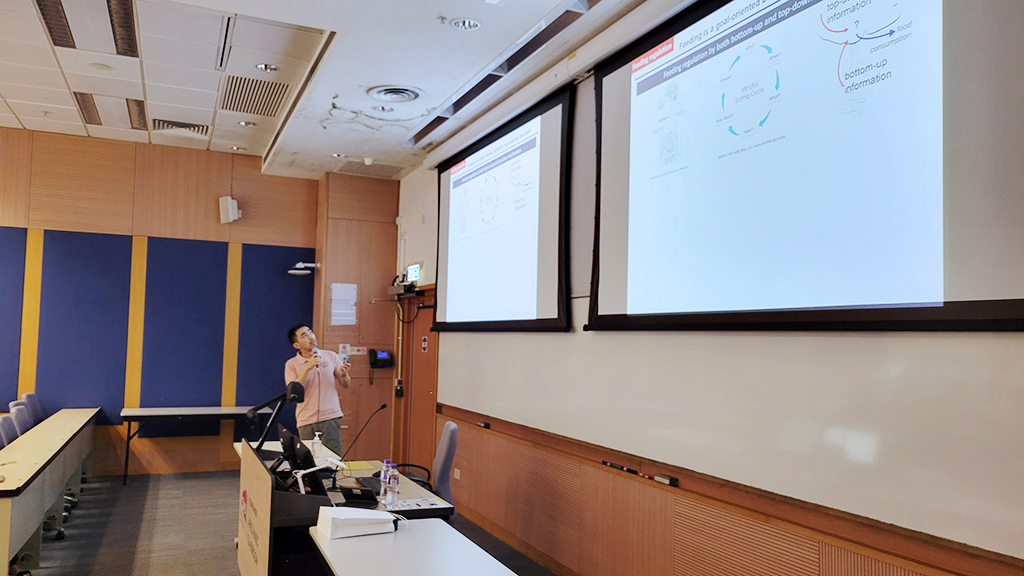
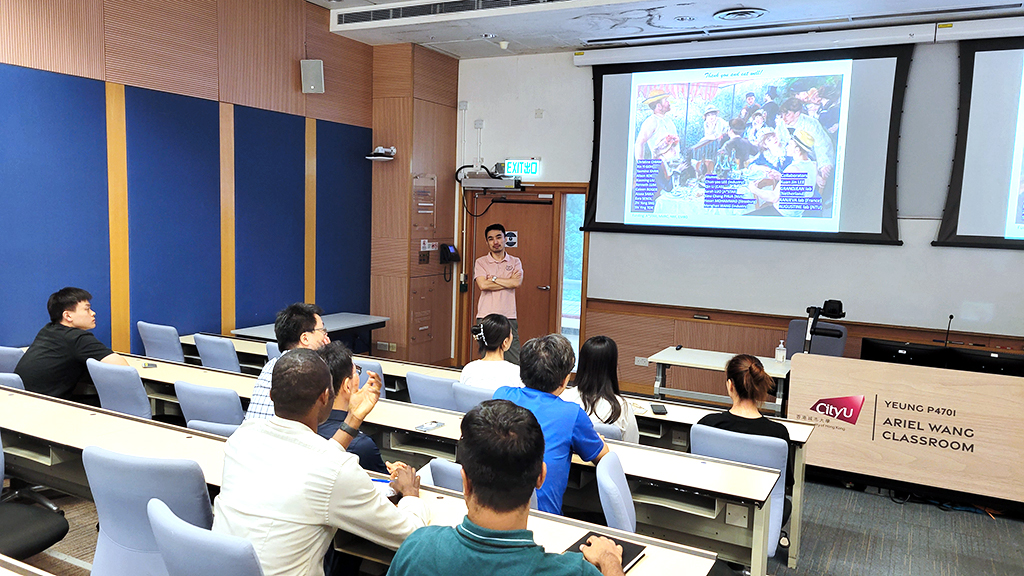
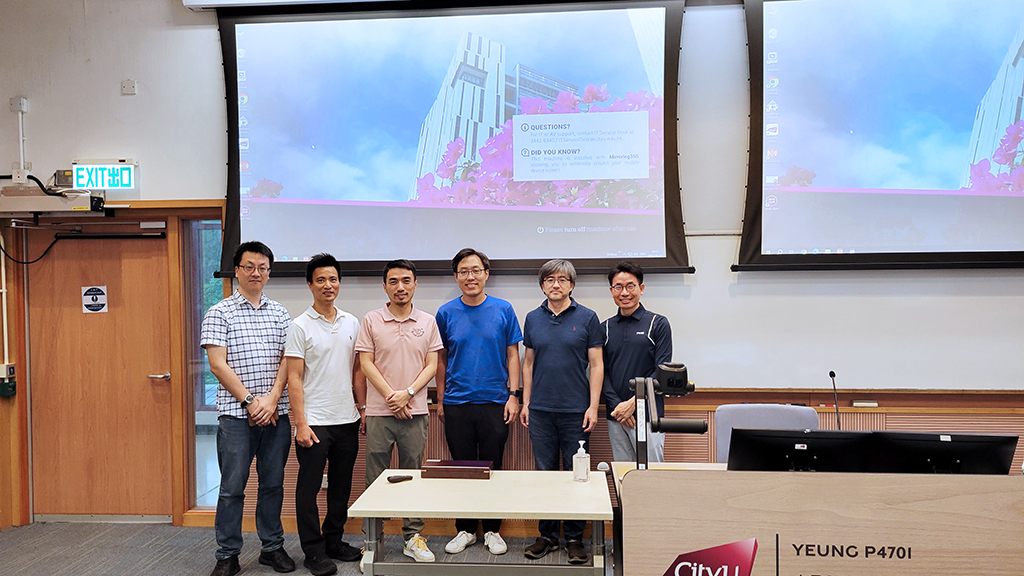
On 24 August, Dr. FU Yu from Agency for Science, Technology and Research (A*STAR), Singapore, delivered a seminar entitled ‘Feeding Regulation by Tuberal Nucleus Somatostatin Neurons and their role in Neurodegeneration’. Dr. Fu received his PhD in Neuroscience from Stony Brook University under the guidance of Dr. Josh Huang. He conducted his postdoctoral training at the University of California San Francisco with Dr. Michael Stryker. At UCSF, he pioneered in imaging genetically labelled GABAergic neurons in behaving mice, and elucidated the circuit mechanisms of behavioral state-dependent sensory modulation in mouse visual cortex. In 2014, he was awarded the prestigious A*STAR investigatorship and started his lab at Singapore Bioimaging Consortium in 2015. His main research interest is the neural mechanism of metabolic regulation, currently focusing on feeding behavior.
Feeding behavior is highly influenced by contextual information, in addition to one’s nutritional status. Obese individuals tend to consume excessive food due to environmental stimulus rather than physiological needs, but how food palatability and environmental context affect non-homeostatic feeding are largely unknown. In his stimulating presentation, Dr. Fu reported that somatostatin neurons in tuberal nucleus (TNSST neurons) were activated during hunger, subsequently promoting food intake. Repeated activation of TNSST neurons in a new context presented with palatable food robustly conditioned mice to increase food consumption in the satiated state. Using retrograde viral tracing and chemogenetic manipulation, Dr. Fu’s team found that direct input from subiculum, a region for processing contextual information, was critical for expressing and establishing the contextual feeding conditioning paradigm. His team further identified multimodal input-output in TNSST neurons by quantitative brain-wide mapping. Apart from regulating feeding behavior with contextual information, the role of TNSST neurons in the metabolic deficits associated with Huntington’s disease was also discussed in this seminar. Dr. Fu’s extensive research on TNSST neurons will serve as important leads in the management of obesity and neurodegeneration.