
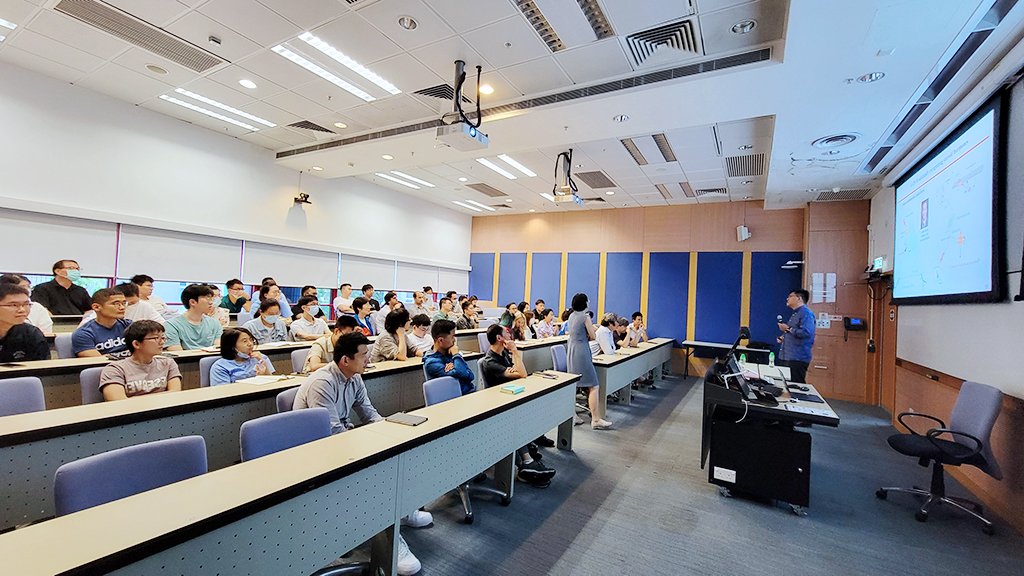
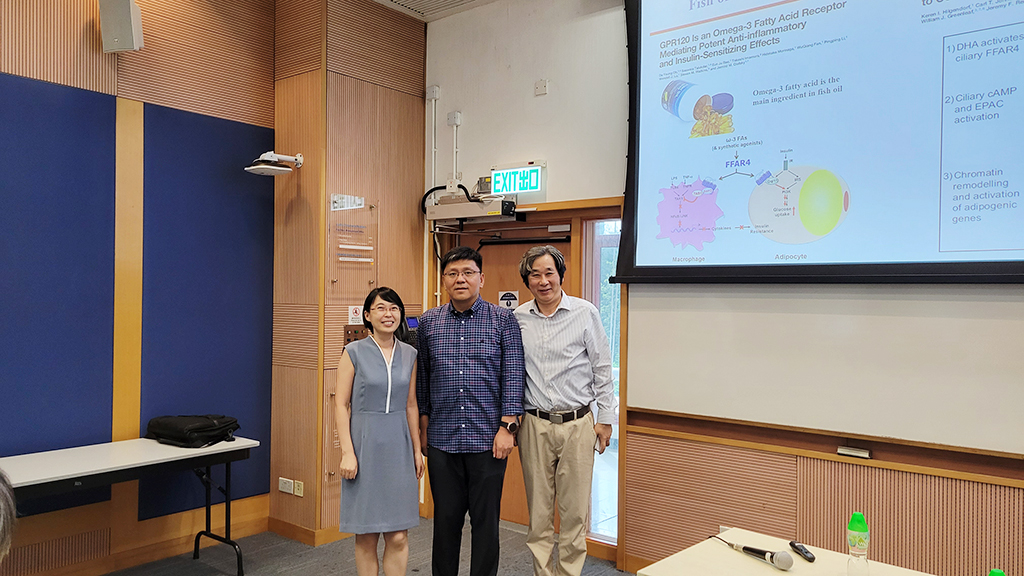
Professor SUN Jinpeng has long been engaged in the research of membrane G protein-coupled receptors (GPCRs), focusing on the cellular mechanism of GPCR functional diversity and the development of drugs targeting GPCR. He has made great achievements in the field of GPCR in recent years.
The GPCR family contains more than 800 members. However, more than 100 members are still orphan receptors – that is, their endogenous ligands have not yet been discovered. In recent years, Professor Sun has successively discovered several new GPCR-endogenous ligand pairs, including GPR64-DHEA/DHEAS, GPR97-glucocorticoid, GPR126-progesterone/17-OHP, AT1R-Homocysteine/COMP, Olfr109-insB:9-23, and LGR4-Nidogen-2, and systematically revealed the structural basis and physiological function of these GPCR-ligand pairs.
Sensation and perception are among the oldest and most important topics in all of psychology. Professor Sun examined various coding mechanisms of itch and mechanical perception by GPCRs. He revealed the mechanism of itch receptor recognition of various ligands and their unique activation mode, and clarified how they are important for itch sensation. He used the adhesion receptors ADGRG2 and ADGRG4 as models to prove that the receptors sense mechanical force and were activated through the Stachel sequence, and further determined the core role of the interaction between the Stachel sequence and the receptor. Professor Sun also revealed the molecular mechanism of the class II olfactory receptor mTAAR9 recognizing four endogenous amine ligands (phenethylamine, dimethylcyclohexylamine, cadaverine, and spermidine), elucidating the unique activation mode of this receptor.
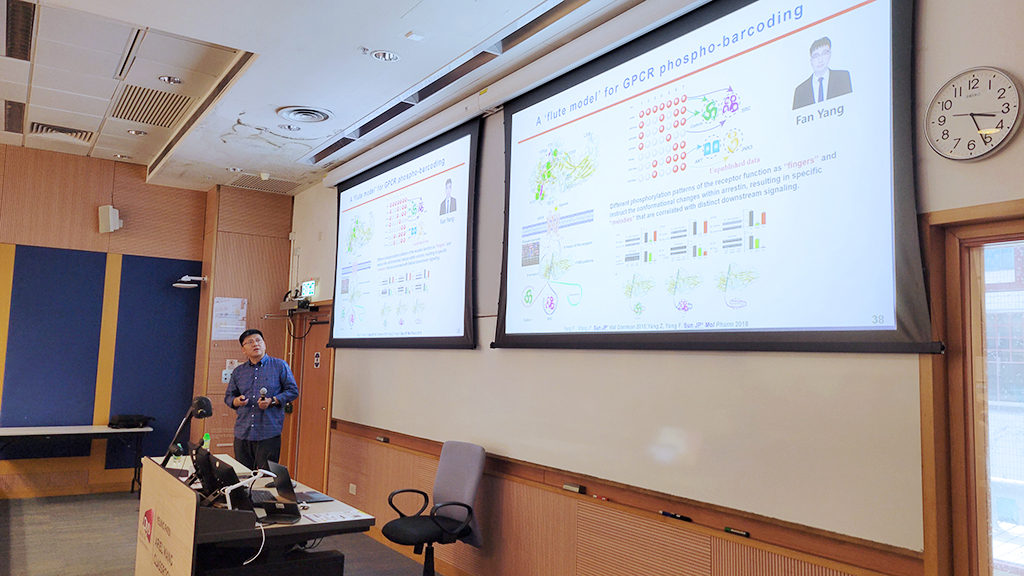
The downstream signaling pathway of GPCR is mainly mediated by G proteins and arrestin. While the signaling pathways mediated by G proteins are relatively clear, how arrestin activates more than 30 different downstream signaling pathways is still elusive. He innovatively proposed the “Flute model” of receptor phosphorylation coding, the sorting mechanism of polyproline dock and the timing effect of phosphorylation to provide a comprehensive understanding of signal transduction of GPCRs.
In summary, Professor Sun elucidated the significance of the GPCR family in the human body through vivid explanations. He also enhanced our understanding of how we perceive the world through GPCRs.