Reveal the correlations between gene therapy vectors and toxicity
Gene therapy brings great hope to cure many inherited or rare diseases. However, as more and more gene therapies are expected to be approved for clinical trials, new problems may arise. Adeno-associated virus, AAV, does not cause any known disease and are commonly used as vector in gene therapy. But it was found that sometimes it can cause toxicity and inflammation in targeted tissues in animals and humans. A joint-research by City University of Hong Kong (CityU) and Harvard Medical School has revealed that the AAV toxicity is correlated with the cis-regulatory sequences which control gene expression in the virus genome.
In late 2017, Luxturna, the AAV vector gene therapy to treat a rare inherited blinding disease, was proven for safety and efficiency by the US Food and Drug Administration (FDA). This marked a milestone for gene therapy and has brought great hope to people with rare diseases. Earlier this year, the FDA anticipated that by 2020 they will be receiving more than 200 investigational new drug applications, and by 2025, they will be approving 10 to 20 cell and gene therapy products a year.
However, AAV is not completely problem-free. It has been reported to cause inflammation and toxicity in the eyes and other organs, but this problem had not been studied carefully.
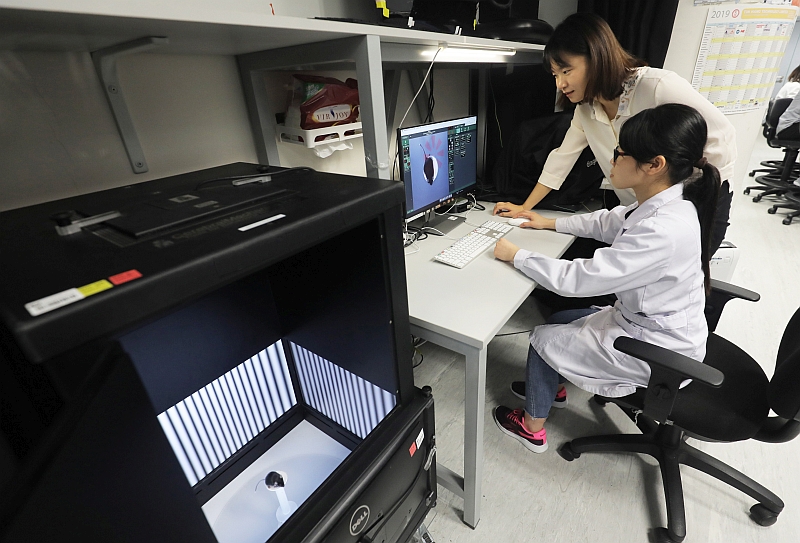
The research group led by Dr Xiong Wenjun, Assistant Professor of Department of Biomedical Sciences (BMS) at CityU, has been interested in developing gene therapy vectors to treat retinal degeneration diseases.
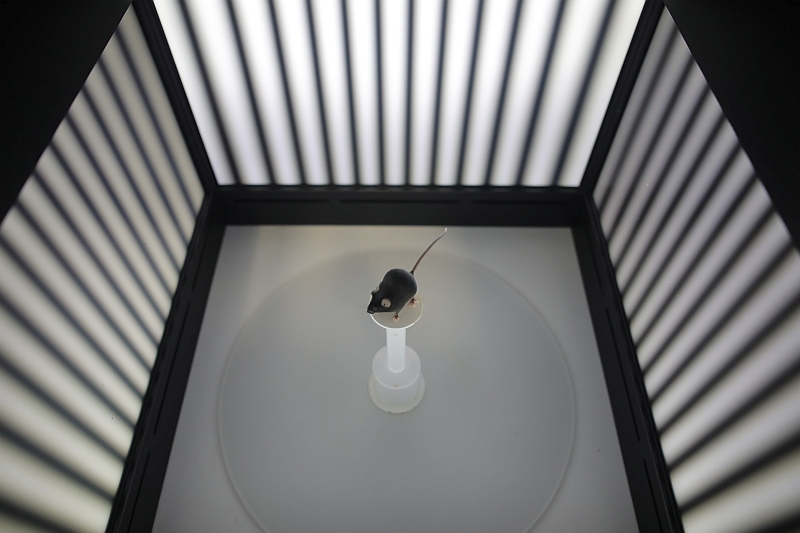
In a joint research with Harvard Medical School, they found that while some AAV vectors were toxic in the eyes of mice, the others were perfectly nontoxic. The toxicity, when present, could cause inflammation, abolish the therapeutic effect of the gene therapy vector, and induce retinal cell death and severe visual function loss.
They tried to track down the problem and found that the toxicity was not caused by the viral shell proteins nor the virus production methods. Instead, toxicity was associated with certain cis-regulatory sequences, which control gene expression in the virus genome.
They found that a common property of the toxic cis-regulatory sequences is that they drive broad and strong gene expression in the eye, especially in retinal pigment epithelial cells. The cis-regulatory sequences that direct gene expression only in the photoreceptor cells were non-toxic, as far as they tested.
The findings were published in science journal Proceedings of the National Academy of Sciences (PNAS), titled "AAV cis-regulatory sequences are correlated with ocular toxicity".
“Our study suggests to choose cell type-specific over broadly active cis-regulatory sequences whenever possible to avoid toxicity. If sensitive and organ-specific assays are developed and tested for different manifestation of toxicity, safer vectors could be designed to avoid inflammation and toxicity due to viral vector genomic elements,” says Dr Xiong.
This work was first started when the initial observation of AAV toxicity was made by Dr Xiong when she was a postdoc at Harvard Medical School. Later, her research team at CityU, in collaboration with Professor Constance Cepko’s lab at Harvard Medical School, carried out further investigation. The work by the two teams together will help the researchers in field to choose and design safer AAV vectors for gene therapy trials.
Dr Xiong and Professor Cepko are the correspondence authors of the paper. The first co-authors are Dr Xiong, and Dr David M. Wu and Dr Xue Yunlu from Harvard Medical School. Other authors include PhD student Mai Shuyi from BMS Department.