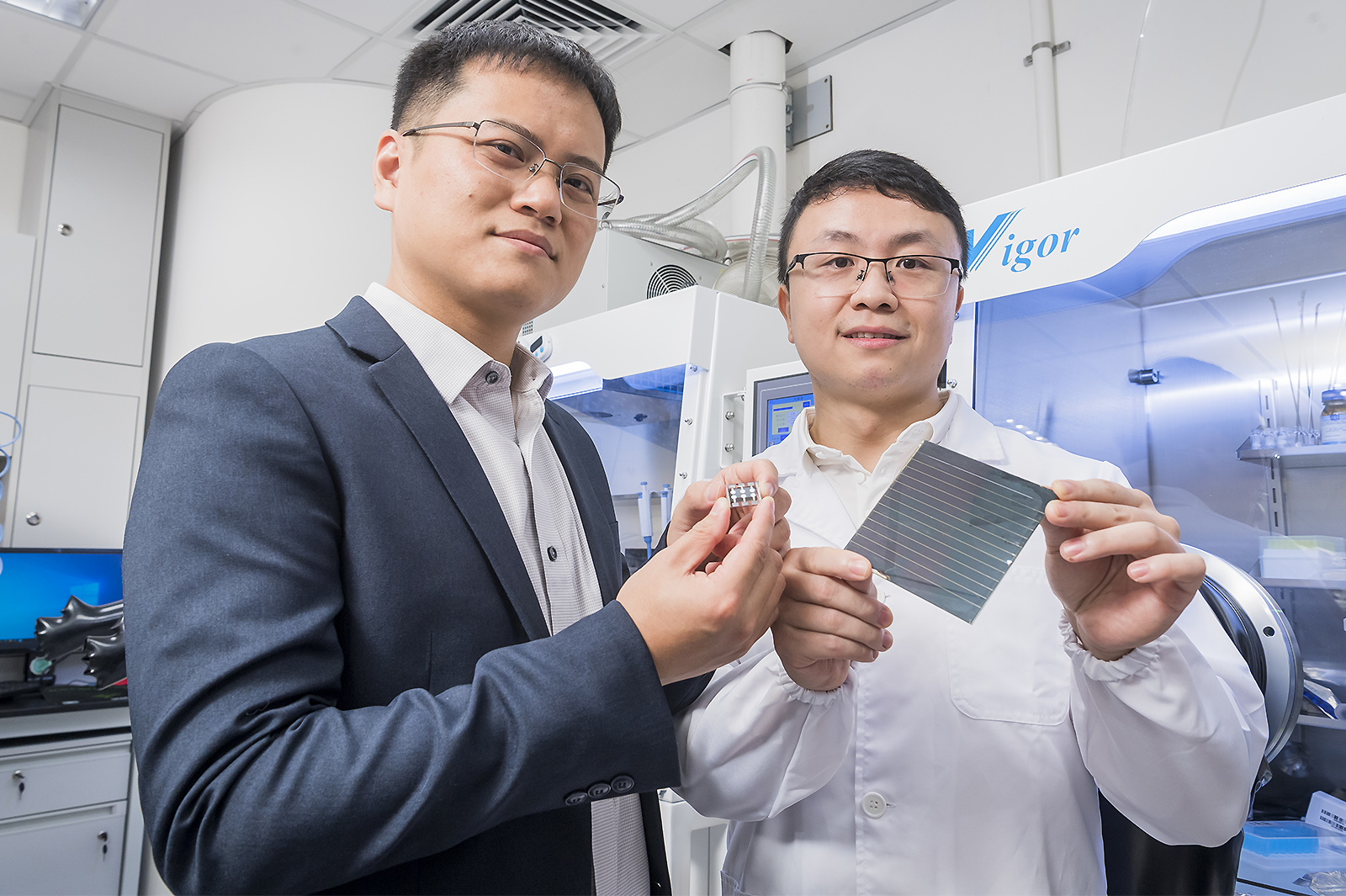
 Professor Zhu (left) and Dr Gao of the Department of Chemistry of CityUHK hold their innovative solar cells.
A new fabrication technique for substantially enhancing the prospects of commercialising perovskite solar cells through improved stability, reliability, efficiency and affordability is underway at City University of Hong Kong (CityUHK).
Published in Science, the research is significant because the simple device structure that the CityUHK team has built can facilitate future industrial production and enhance confidence in the commercialisation of perovskite solar cells.
"The improvements in stability and the simplification of the production process of perovskite solar cells represent a significant step forward in making solar energy more accessible and affordable," said Professor Zonglong Zhu of the Department of Chemistry, who explained that the mineral perovskite is used extensively to convert sunlight into electricity efficiently.
Two innovations
In broad terms, the CityUHK team is working on a new type of solar cell that can turn sunlight into electricity more efficiently and last longer than current solar cells.
The team has developed two innovations for creating the structure of the solar cells. The first innovation is the integration of the hole-selective materials and the perovskite layers, which simplifies the manufacturing process.
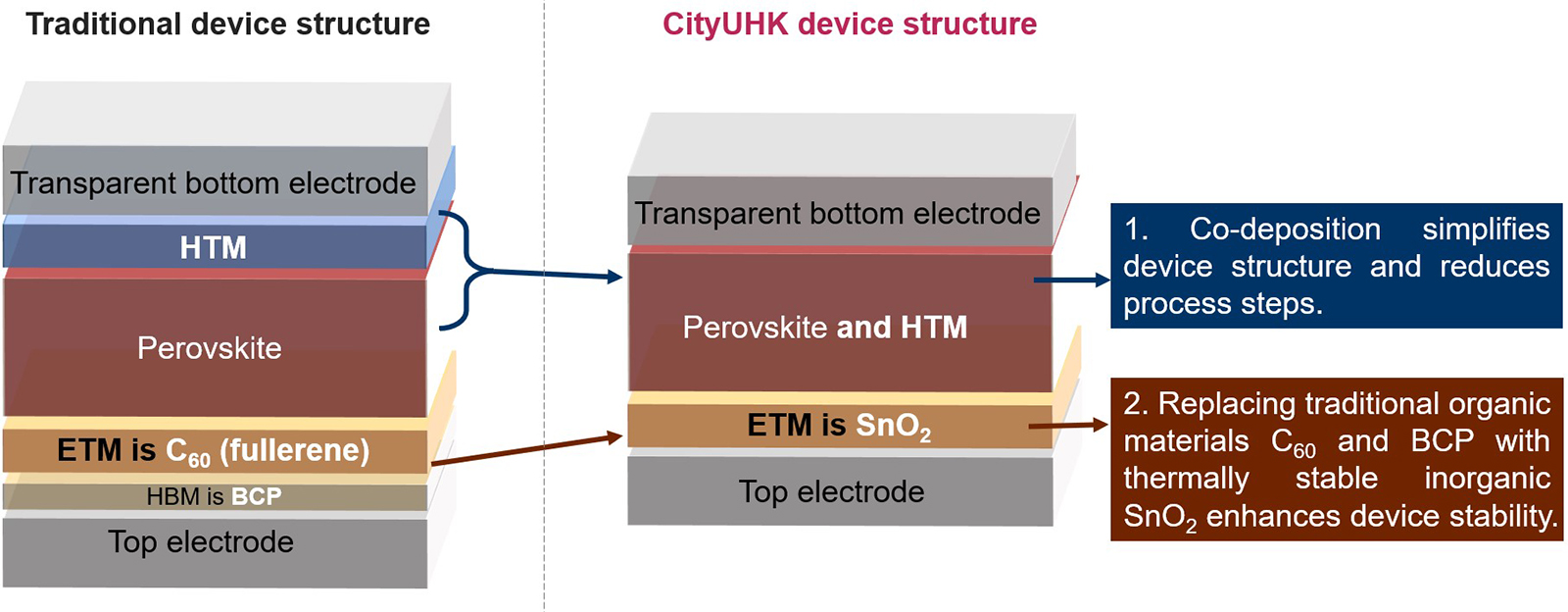
The second is that the operational stability of the device is greatly enhanced by using the inorganic electron transport layer, tin oxide, which has excellent thermal stability, to replace traditional organic materials such as fullerene and BCP.
“The device structure reported in this study represents the most simplified architecture in the current field of perovskite solar cells, offering significant advantages for industrialisation,” said Dr Danpeng Gao, co-author of the Science paper and a Postdoc at CityUHK.
Specifically, Dr Gao explained that this solution does not require a traditional organic transfer layer, effectively reducing the material cost in the manufacturing process while greatly simplifying the production steps.
Cost-effective and sustainable
The study has produced some promising data. According to Professor Zhu, the team has achieved power conversion efficiencies exceeding 25% by optimising oxygen vacancy defects within the tin oxide layer while retaining over 95% efficiency after 2,000 hours of continuous operation under rigorous test conditions.
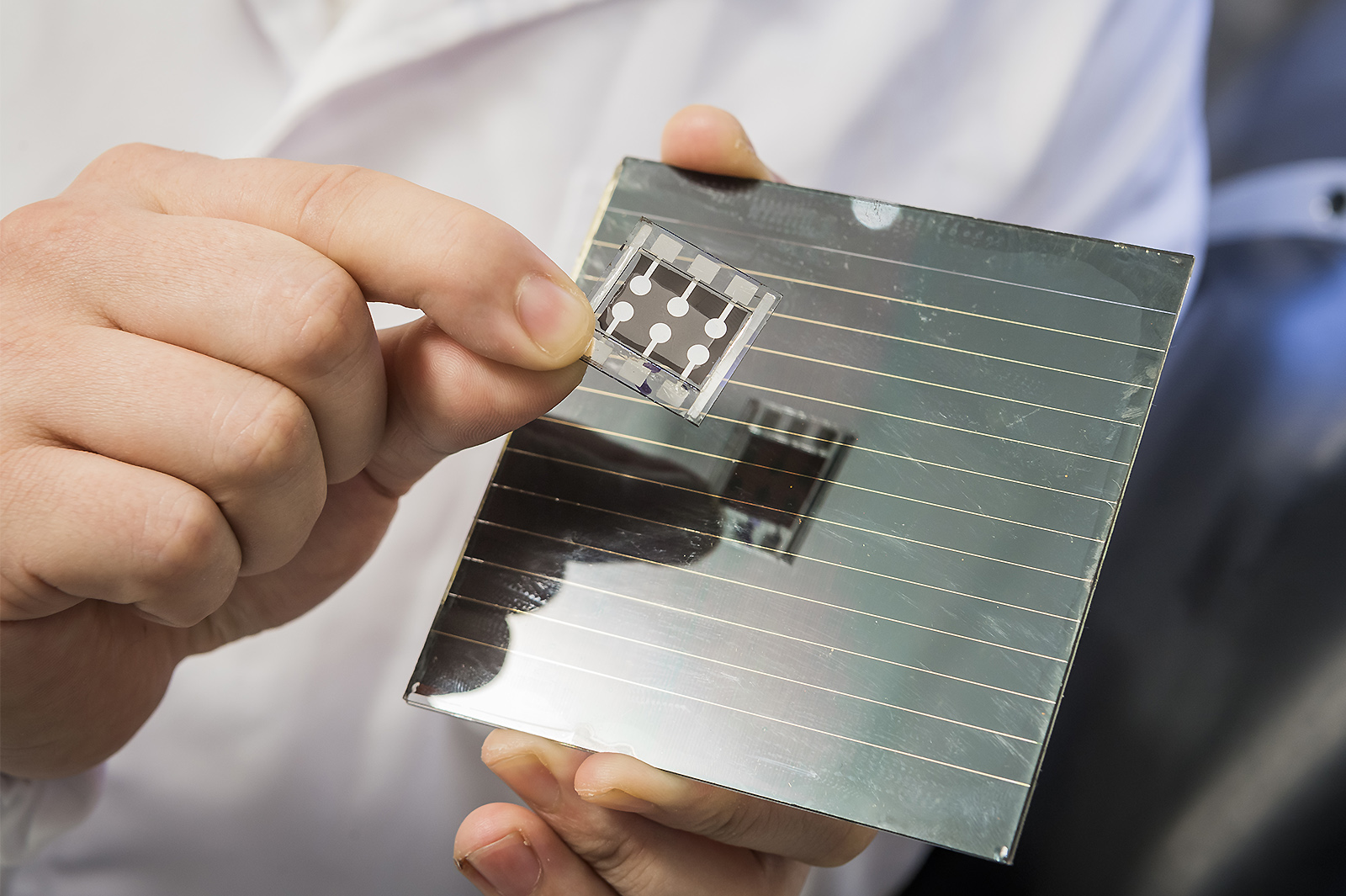
This performance surpasses the stability of traditional perovskite solar cells, meeting several industry benchmarks for longevity. The results pave the way for more reliable and efficient solar cells, simplifying manufacturing processes and making producing solar cells at scale more cost-effective.
Researchers in materials science, renewable energy technology, and solar cell manufacturing companies are likely to be interested in this research because it can revolutionise the production and long-term stability of perovskite solar cells. Additionally, energy consumers and environmental organisations will see the benefits of more efficient, durable, and easier-to-manufacture solar cells.
Not only that, policymakers focused on environmental protection will find this research noteworthy as it promotes broader applications of renewable energy, reducing reliance on fossil fuels and protecting the environment and climate.
Scaling up
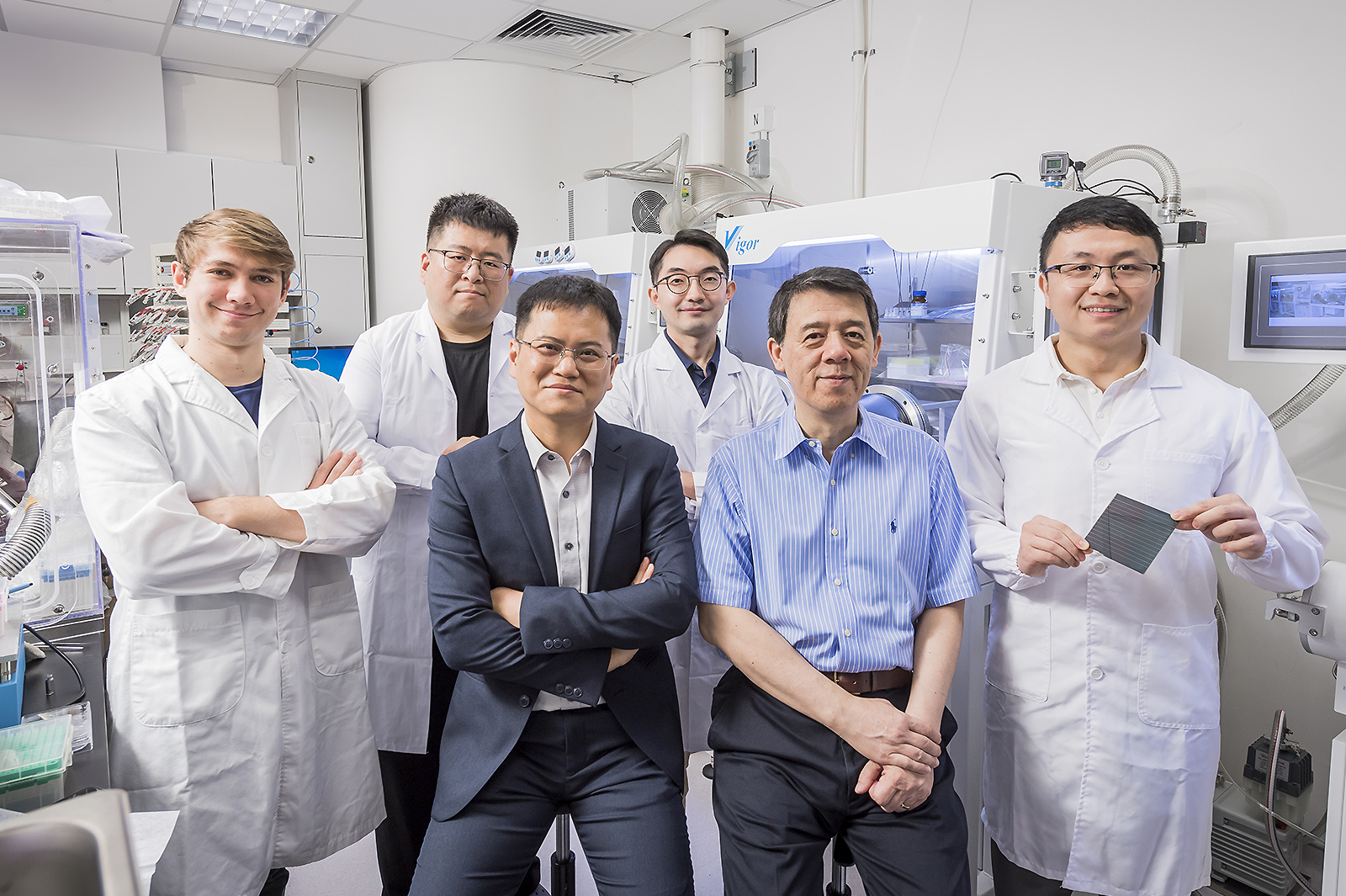
This development in solar cell research could profoundly impact global energy markets and help accelerate the shift towards renewable energy sources, the CityUHK teams said, while the next phase of the study will focus on applying this innovative structure to larger perovskite solar modules, aiming further to enhance the efficiency and scalability of this technology.
This research was conducted in collaboration with teams from the National Renewable Energy Laboratory and Imperial College London, underscoring the global effort to develop sustainable energy solutions.
“With the potential to be implemented in solar energy systems within the next 5 years, this research is a critical step towards achieving more sustainable and environmentally friendly energy production globally,” Professor Zhu added.
The Science paper is titled "Long-term stability in perovskite solar cells through atomic layer deposition of tin oxide."
This research article originated from CityUHK Research Stories.