
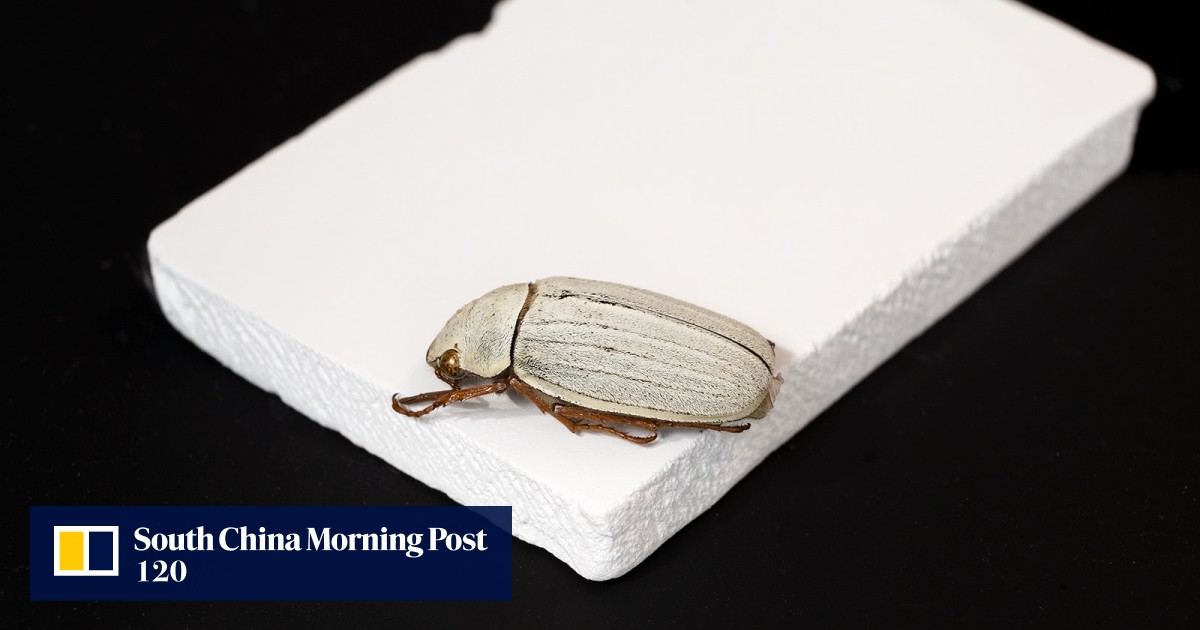
When applied to roofs, a house covered with the novel white material could be up to 2.5 degrees Celsius (4.5 degrees Fahrenheit) cooler indoors than one fitted with ordinary white tiles found on the retail market, saving more than 20 per cent of air conditioning energy to reach the same indoor temperature, the team said.
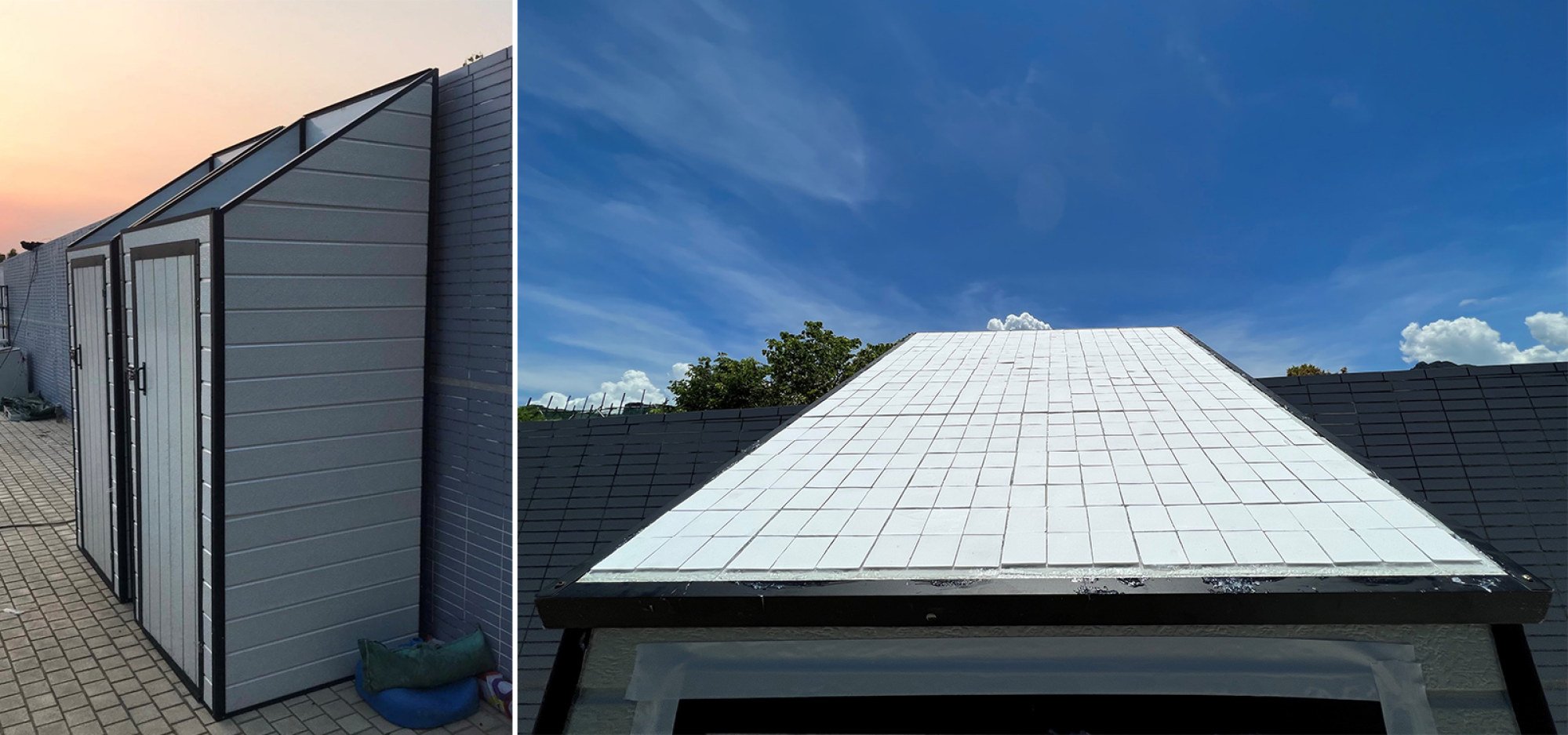
“With high weather resistance, high mechanical strength, favourable recyclability, notable Leidenfrost depression and optional colour features, the cooling ceramic can readily be applied to different scenarios and outdoor infrastructures on a large scale,” the team from City University of Hong Kong and Hong Kong Polytechnic University wrote in an article published in the peer-reviewed journal Science this month.
Carbon emissions from space cooling have nearly tripled since 1990 to 1 billion tonnes (1.1 billion tons) in 2022, according to the International Energy Agency. Since 2000, energy demand for space cooling has grown around an average 4 per cent a year.
The agency said the use of air conditioners was on track to become a top driver of global electricity demand in the next three decades.

05:38
Why New Delhi is turning to cloud-seeding to tackle its smog problem
Why New Delhi is turning to cloud-seeding to tackle its smog problem
In the new study, researchers in Hong Kong advanced their research in passive radiative cooling, a technology where surfaces use the “cryogenic universe” between space and the Earth’s surface as a natural heat sink for heat removal, to create energy-free and refrigerant-free cooling ceramic.
The design was inspired by the whitest known insect, the Cyphochilus beetle native to Southeast Asia.
In mimicking its bio-whiteness, the team created a ceramic with a porous structure capable of efficiently scattering almost all the wavelengths of sunlight, resulting in a record high solar reflectivity of 99.6 per cent, which outperforms existing products.
The material made of aluminium oxide is highly resistant to UV degradation and fire, showing a 1.3 per cent drop in its solar reflectivity after being exposed to sunlight outdoors for a year and withstanding temperatures exceeding 1,000 degrees Celsius.
Chinese scientists create low-carbon building materials inspired by worms
Chinese scientists create low-carbon building materials inspired by worms
It could be made curved and in other colours. Although colouring slightly compromises its reflectivity, the cooling ceramic in vivid colours similar to commercial tiles is still cooler when exposed to direct sunlight at midday, according to their experiments.
The team conducted field tests in Beijing, as well as Boston, Philadelphia and Yellowstone National Park in the United States, and found the material worked to reduce temperature under different climates.
02:49
Leftover oil from hotpot dishes in China reused to fuel planes
Leftover oil from hotpot dishes in China reused to fuel planes
Lead author Edwin Tso Chi-yan, an associate professor at the school of energy and environment at CityU, said the product was set for market launch late next year via his start-up.
“Our simulation shows that places closer to the equator would benefit most from using the cooling ceramic as an external envelope material on the walls and roof,” Tso said.
The study found that more than 10 per cent of annual indoor air conditioning costs could be saved per year in tropical regions.
China’s top spy agency cracks down on illegal foreign weather stations
China’s top spy agency cracks down on illegal foreign weather stations
“As researchers, we drill into the technicalities to improve product performance. When it comes to running a business, the team focuses on their real-world applications. We learn along the way where and how cooling technologies are best used and which regions to market them to,” he said.